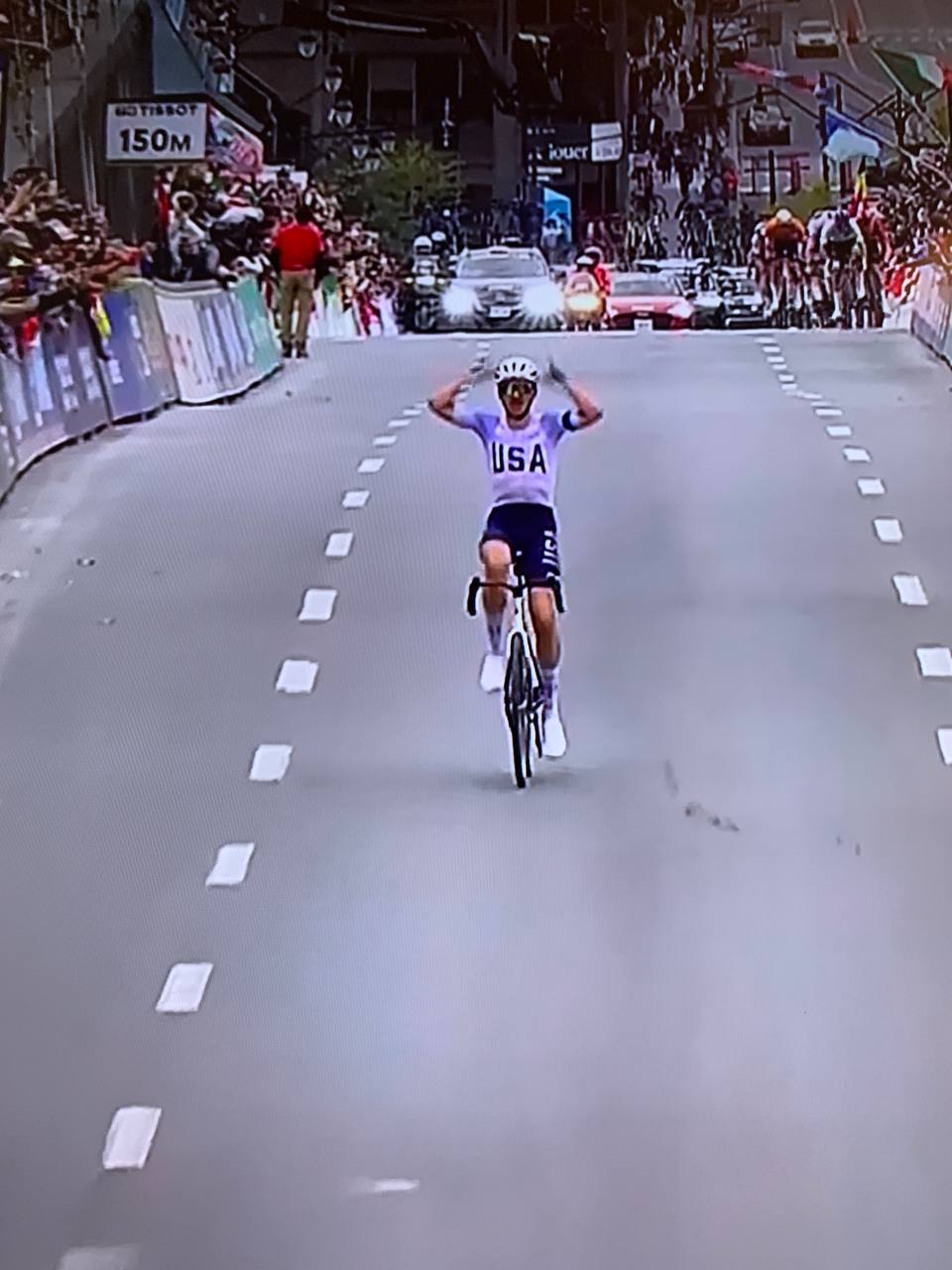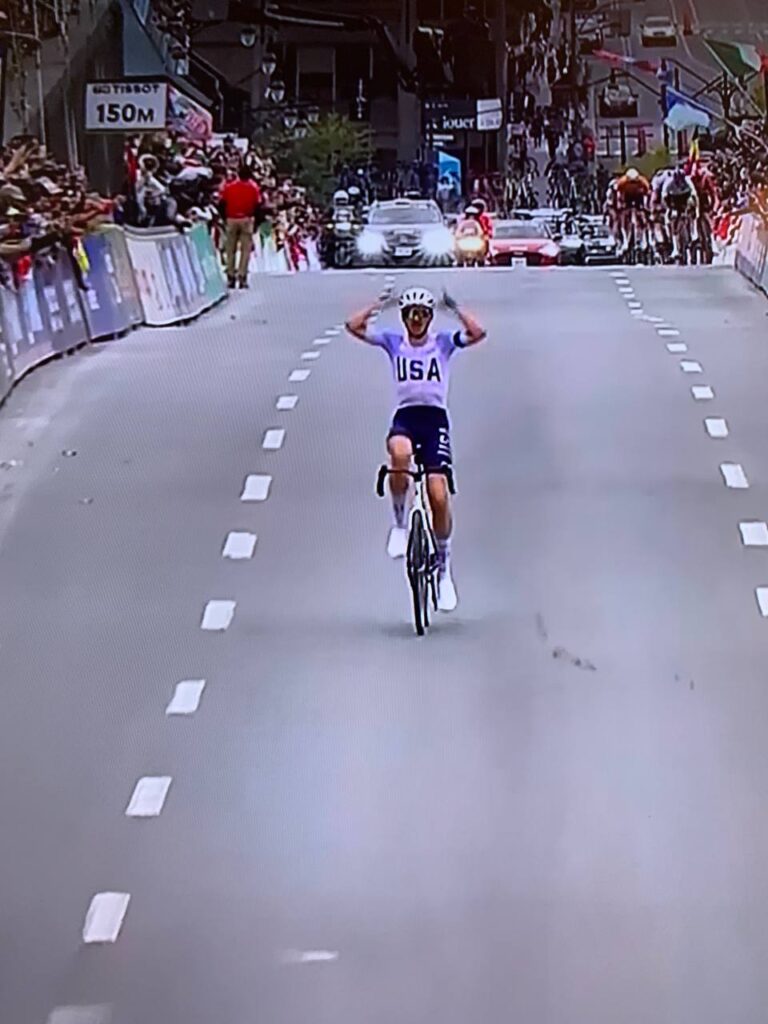
Nobody had McNulty’s name near the top of the betting lists in Montreal. Six hours and seventeen minutes later, it was the only name that mattered.
The American rider from UAE Team Emirates-XRG produced one of the most improbable rides of the season to win the elite men’s road race at the UCI Road World Championships, attacking alone with roughly 32 kilometres remaining and somehow surviving to the line. He attacked with 33 kilometres remaining and held off a fragmented chase all the way to the finish. It gave the United States its first rainbow jersey in the category since Lance Armstrong won in Oslo in 1993, a gap of 33 years.
The scale of the achievement only grew clearer as the numbers came in. The 1993 race had covered 257.6 kilometres, with Armstrong winning in 6h 17′ 10″, ahead of Miguel Induráin and Olaf Ludwig. This year’s course in Montreal was longer still, and just as brutal.
A race that refused to settle
The build-up to McNulty’s move was chaos in its own right. Breakaways came and went for most of the afternoon before a select group finally formed with 35 kilometres to go, absorbing a lead quartet built around Mathieu van der Poel and bringing pre-race favourites Isaac del Toro and Paul Seixas into the mix. Tom Pidcock, Ben Healy and Primož Roglič were all still there when the group thinned to a dozen riders.
It was the Americans who broke the stalemate. Matteo Jorgenson went first, then McNulty followed and found daylight. What started as a ten-second gap ballooned to over a minute with two laps remaining, then shrank alarmingly to just 10 seconds on the final ascent of the Camillien-Houde climb, the race’s decisive obstacle. The American built a lead of 1’08 with two laps remaining, with multiple riders trying and failing to bridge as stop-go racing behind helped him hold his advantage. Jorgenson’s marking work in the chase group proved decisive in keeping the field disorganised long enough for his teammate to survive.
McNulty crossed the line 13 seconds clear of Australia’s Michael Matthews, with Van der Poel completing the podium in third. Remco Evenepoel, chasing a road race and time trial double after already claiming the time trial title, could only finish 12th, his bid for a historic sweep ending without a medal.
Disbelief on the line
McNulty’s own reaction said everything about how unlikely the win felt even to him. “Honestly I don’t know. Really this is – I don’t know. I’m really at a loss. Until the last 100 metres I really didn’t even believe it I was so tired,” he said moments after crossing the line, still processing what had happened on the Mont Royal climb where he admitted to riding on fumes: “Absolutely, the last climb up Mont Royal I was doing like zone 2, just dying, but I just kept pushing.”
Asked whether he had genuinely believed the win was possible beforehand, his answer was almost as remarkable as the ride itself: “No, I mean we talked about it, I made some jokes to my wife – I knew something could happen, but it would take a miracle, and I guess miracles happened.”
The Montreal circuit was not unfamiliar territory. McNulty had already shown an affinity for the course by winning the Grand Prix Cycliste de Montréal on the same roads in 2025, and returning to finish third there again just weeks before the World Championships. What changed on Sunday was the stakes, and the company: a start list that included Pogačar’s designated successors, the reigning Olympic champion, and half a dozen Grand Tour winners, all outridden by a 28-year-old from Phoenix who arrived without a single point next to his name in the pre-race predictions.